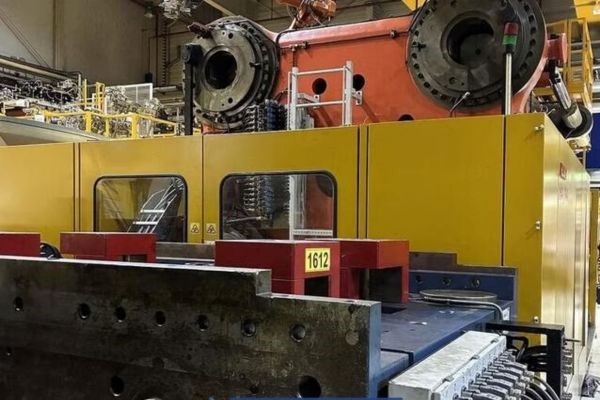
The Unsung Hero of Every Factory Floor: What a Molding Machine Really Does to Your Production
There is something deeply satisfying about watching raw material go in one end of a machine and a finished part come out the other. Clean. Precise. Repeatable. If you have ever spent time on a production floor, you know that feeling. And if you are in manufacturing, plastics, or metalworking, a molding machine sits right at the heart of that process. Yet most people never really stop to think about it. The machine just runs. Shift after shift. Part after part. And somehow, that reliability starts to feel ordinary. It is not.
Why Molding Machines Deserve More Respect Than They Get
Think about the things around you right now. The casing of your phone. The dashboard of your car. The bottle on your desk. Somewhere in the supply chain, a molding machine shaped that part. Millions of them. All with the same tolerances, the same finish, the same geometry. What people forget is how much engineering goes into making that look easy. Clamping forces, injection pressures, cooling cycles, mold temperatures. Every single variable matters. Get one wrong and the parts warp, sink, flash, or crack. Get them all right and the machine just keeps going. That is not magic. That is good equipment, properly set up.
The Different Faces of Molding Technology
Not all molding is the same, and this is where it gets genuinely interesting. Injection molding is probably the most well known. Plastic granules melt, get pushed into a mold under high pressure, cool down, and pop out as a finished component. Fast. Efficient. Scalable. But then there is blow molding for hollow containers, compression molding for rubber and composites, and rotational molding for large hollow shapes. Each process has its strengths and each requires a machine built specifically for that application. For manufacturers, choosing the right type is not just a technical decision. It is a financial one too. The wrong machine for the job costs money every single day in wasted cycle time, material loss, and rejected parts.
How Feed Systems Can Make or Break Your Output
The molding machine itself is only one part of the equation. What feeds it matters just as much. When you are running coil fed blanks into a press or forming line, the quality of your feed system directly affects your part quality and your uptime. Inconsistent feeding means inconsistent parts, more downtime, and scrap rates that quietly eat your margins. This is exactly where equipment like the AGM-line coil cut becomes part of the conversation. Precision coil cutting and feeding systems complement molding operations by ensuring material entering the process is consistent, properly tensioned, and accurately positioned every single time. When the front end of your line is sorted, everything else follows.
The Smart Buyer Mindset on Used Equipment
A well maintained molding machine from five or eight years ago, sourced from a reputable dealer, can deliver the same output as a brand new unit at a fraction of the cost. The capital you save goes back into the business. Into tooling. Into people. Into growth. The key word is well maintained. A machine that has been properly serviced and comes with documented history is a completely different proposition from one that has been run into the ground. This is why working with people who actually know industrial machinery matters so much. You need to know what you are buying.
What the Future Looks Like for Molding
Servo driven systems are replacing hydraulic ones in many applications, bringing better energy efficiency and repeatability. Automation and robotics are being integrated directly into molding cells. Industry 4.0 connectivity means machines can now report their own health in real time, and predictive maintenance is becoming real, not just a buzzword. All of this means one thing for people making buying decisions today. The machine you choose now shapes your competitiveness for the next decade. A molding machine, properly chosen and well maintained, is one of the most reliable investments you can make on a production floor. Treat it well, understand it, and make sure what feeds it is just as capable as the machine itself. The parts will speak for themselves.





Leave a Reply